
International High-End Forum on Energy Transition 2025 Held at Macau University of Science and Technology
On November 15, the International High-End Forum on Energy Transition 2025 and the 18th Energy Transition Forum were grandly held at Macau University of Science and Technology (MUST). Themed “Climate Change and Innovative Pathways for a ‘Dual-Carbon’ Economy,” the event brought together experts and scholars from prestigious institutions such as the Chinese Academy of Sciences, Wuhan University, Sun Yat-sen University, Hunan University, Huazhong University of Science and Technology, Beijing Normal University, Hong Kong University of Science and Technology (Guangzhou), The Hong Kong Polytechnic University, Macau City University, and the University of Technology Sydney. Together, they explored effective strategies to address climate change and energy transition.
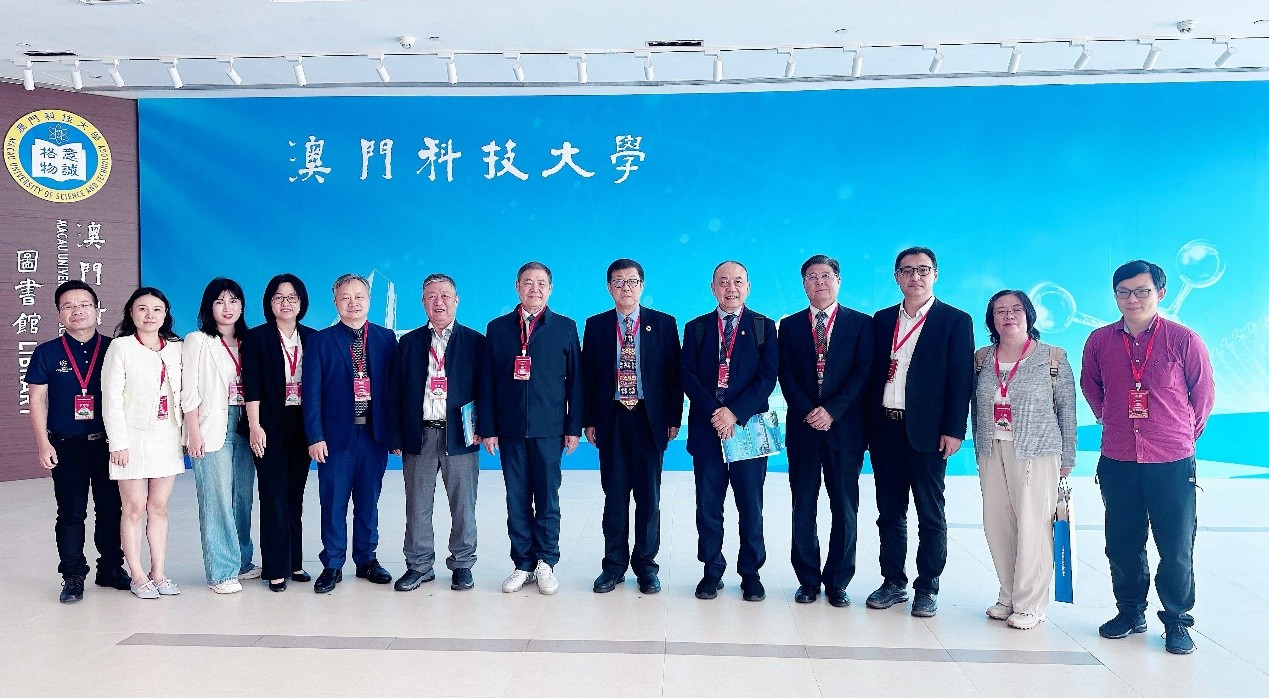
Prof. Liu Chengkun, Director of the Institute for Sustainable Development at MUST, and Prof. Shi Xunpeng, President of the International Society for Energy Transition Studies and Research Principal at the Australia-China Relations Institute, University of Technology Sydney, delivered opening remarks.
During the keynote forum, Prof. Pan Jiahua, Vice Chair of China’s National Expert Committee on Climate Change and Professor at Hong Kong University of Science and Technology (Guangzhou), elaborated on China’s experience in boosting ambition for COP30. He emphasized that the key to China’s 2035 Nationally Determined Contributions (NDCs) lies in reducing carbon emissions from fossil fuels, focusing on achieving zero-carbon energy, flattening governance structures, and market-oriented reforms.
Dr. Sun Xiansheng, Chairman of the International Society for Energy Transition Studies Council and former Secretary-General of the International Energy Forum, reviewed China’s achievements in green and low-carbon energy transition and outlined future directions. He noted that transitioning away from fossil fuels is a gradual process requiring collective efforts.
Prof. Qi Ye, Dean of the Social Hub at Hong Kong University of Science and Technology (Guangzhou), discussed whether China’s coal consumption has peaked. Prof. Qi Shaozhou, Director of the Center for Climate Change and Energy Economics at Wuhan University, argued that the current energy transition represents a fundamental transformation of the energy system—not merely adding new energy sources but revolutionizing the entire process of energy production, distribution, storage, and consumption.
Prof. Sun Yongping, Deputy Director of the National Governance Research Institute at Huazhong University of Science and Technology, provided a detailed analysis of the ripple effects of the EU Carbon Border Adjustment Mechanism (CBAM) on global supply chains. Using a cost-transmission-capable multi-regional input-output model, he comprehensively assessed CBAM’s impact and identified key rules under the EU Emissions Trading System.
The parallel sessions, chaired by Prof. Wang Yuan from Tianjin University, featured scholars from Sun Yat-sen University, Hunan University, Beijing Normal University, The Hong Kong Polytechnic University, and Macau City University, who shared cutting-edge insights on environmental risks, policy frameworks, carbon reduction in power generation, corporate digitalization, and green capital.
The forum was organized by the International Society for Energy Transition Studies, hosted by the MUST School of Business, and funded by the Macau Foundation.