ISETS Advances Youth Engagement in Global Energy Transition at the 15th International Forum on Energy for Sustainable Development
November 20, 2026
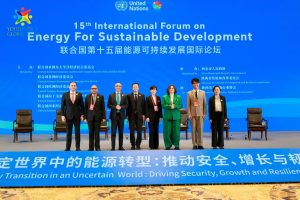
The 15th International Forum on Energy for Sustainable Development (IFESD-15), themed “Energy Transition in an Uncertain World: Driving Security, Growth and Resilience”, was held in Xi’an, China, from November 3 to 5, 2026. It brought together international stakeholders to discuss how countries can navigate energy transition challenges while strengthening energy security, economic growth and resilience.
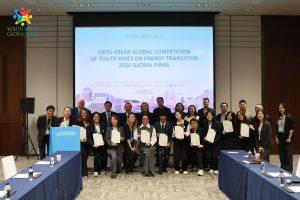
The International Society for Energy Transition Studies (ISETS) played an active role in the forum, contributing expert perspectives to policy discussions and organising a series of activities to strengthen youth participation in global energy governance. Among its key contributions were the 3rd ISETS-ESCAP and 4th ISETS Global Competition of Youth Voice on Energy Transition, alongside the Youth Dialogue.
At the High-Level Plenary Session, ISETS Youth Ambassador Xingyu Chen, a PhD candidate at Southwestern University of Finance and Economics, presented a youth-led vision for the energy future. Calling for greater emphasis on youth advocacy, intergenerational collaboration and practical implementation, he stressed that young people should not simply inherit the consequences of today’s energy decisions but have an active role in shaping them. He also called for sustained collaboration to build an energy future that is secure, affordable, inclusive and sustainable.
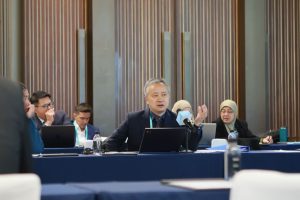
Professor Xunpeng Shi, ISETS President and faculty member at the University of Technology Sydney, gave a keynote address at the Just Transition thematic session, titled “Coal phase-down must give people and places a future”. Drawing on more than 30 years of research, Professor Shi analysed the equity challenges associated with phasing down coal, highlighting the experience of Hegang in Heilongjiang Province. While the benefits of coal phase-down are shared globally, he noted, the economic and social costs are often concentrated among local communities, industrial workers and local governments. He called for transition planning to look beyond power plant closures, placing people’s livelihoods and meaningful community participation at the centre of decision-making.
Bringing youth voices into global energy discussions
Youth engagement was a major focus of ISETS’s programme at the forum. Through international competitions, round-table discussions and exchange activities, young participants had opportunities to present research, share perspectives and contribute practical ideas to energy transition debates.
The 3rd ISETS-ESCAP and 4th ISETS Global Competition of Youth Voice on Energy Transition and Youth Dialogue brought together young researchers and innovators from around the world. Co-initiated by ISETS and the United Nations Economic and Social Commission for Asia and the Pacific (ESCAP), the competition also received support from the United Nations Economic Commission for Europe (UNECE) and the United Nations Economic and Social Commission for Western Asia (UNESCWA).
Youth teams representing six world regions presented original research and practical proposals addressing challenges in the energy transition. Their work was assessed by a panel of UN officials, academics and industry experts, giving young people an international platform to present their ideas and solutions to a wider policy audience.
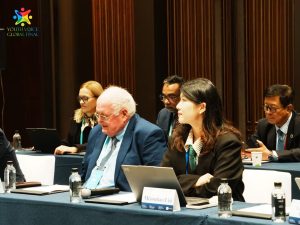
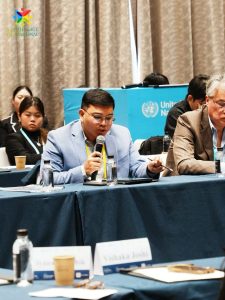
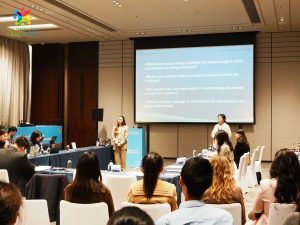
The Youth Dialogue, a key component of the programme, brought together participants from different generations to discuss equity and the long-term implications of the energy transition. At the first round-table, newly appointed ISETS Youth Ambassador Miaomiao Liu drew on competition data to showcase diverse youth perspectives and advocate for piloting youth-driven solutions. In the second session, ISETS Youth Ambassador Augustus Nicko Bas shared insights from his field research, outlining measures to protect indigenous rights and promote intergenerational equity in critical minerals development.
During the open discussion, ISETS Youth Ambassador Xinrui Li highlighted three areas for action: promoting waste-based circularity, improving efficiency through digital technologies and strengthening efforts to address greenwashing. The session concluded with Augustus Nicko Bas presenting the ISETS Youth Message 2026 on behalf of young participants from around the world. The message called for more inclusive youth participation in decision-making, stronger support for vulnerable communities and a balanced approach to measuring energy transition progress.
Building connections beyond the forum
Alongside the main programme, ISETS organised a series of international youth exchange activities to encourage collaboration across generations, organisations and regions. Youth delegates took part in peer-learning sessions with YGRES, UNECE’s youth platform, discussing applications of artificial intelligence in energy and career development opportunities. The sessions also provided an opportunity to establish connections for continued communication and collaboration. They also exchanged views with Professor Bruce A. McCarl of Texas A&M University on bioenergy and interdisciplinary research skills. Professor McCarl contributed to the work of the Intergovernmental Panel on Climate Change (IPCC), which shared the 2007 Nobel Peace Prize with former US Vice-President Al Gore.


Meanwhile, the ISETS Youth Leadership Development Program commenced with ISETS Youth Ambassadors Augustus Nicko Bas and Dilnaza Karmenova interviewing Yi Zhang, Programme Analyst at the United Nations Development Programme (UNDP). The initiative aims to give young participants opportunities to learn from practitioners working in international development and energy-related fields. Volunteers from ISETS’s global network also supported the activities throughout the forum.
ISETS’s participation in IFESD-15 reflected its dual focus on contributing to international energy policy discussions and creating opportunities for the next generation of energy leaders. While its experts addressed issues such as just transition and energy security, its youth Programmes provided a platform for young people to move beyond observation and contribute directly to discussions on energy policy and implementation. Through a combination of competitions, dialogue, practical engagement and policy messaging, ISETS continues to develop pathways for youth participation in global energy governance.
Looking ahead, ISETS will continue to engage in major international energy processes, strengthen cross-border youth networks and promote collaboration between generations and across sectors. It will work with international partners to expand opportunities for young people to contribute their ideas and expertise towards a more inclusive, secure and sustainable energy future.