Newsletter 2025Q4
NEWS AND ANNOUCEMENTS
- ISETS Opens Fee-Paid Membership
The International Society for Energy Transition Studies (ISETS) is pleased to announce the official opening of fee-paid Ordinary Membership, effective immediately.
Until now, Ordinary Membership has been offered complimentarily to our founding members, advisors, and volunteers. In response to strong calls from our community—and in line with international best practices for professional societies—the ISETS Council and Executive Committee have approved the introduction of a fee-based membership model to support our long-term development and member services.
🔹 Concessions for LDC Members
A concession rate is available for individuals from Least Developed Countries (LDCs). Members from LDCs are invited to contact the ISETS Secretariat directly at isets@isets.org to access this benefit.
🔹 Equal Participation for All Members
We wish to reassure our community that there is no difference in access to ISETS activities between Ordinary (paid) and Associate (complimentary) members. All members are equally welcome to participate in ISETS conferences, forums, dialogues, and initiatives.
🔹 New: Delegate Membership Category
To recognize and empower our dedicated volunteers, the ISETS Annual General Meeting (AGM) has approved a new membership category: Delegate. Delegates—selected from long-term volunteers—will hold exclusive voting rights in the election of the ISETS Executive Committee and Council.
🔹 Support ISETS – Contribute Voluntarily
ISETS also welcomes voluntary contributions from individuals or organizations who wish to support our mission of promoting a just and inclusive global energy transition.
This is an exciting milestone as we continue to grow a strong, diverse, and engaged global membership community. We thank you for your ongoing support and look forward to welcoming new members on this next chapter of our journey.
🔗 Join or upgrade your membership today at www.isets.org
- China’s Green Ascent: Reshaping the Global Energy Landscape
ISETS is pleased to have collaborated with Ember on the China Energy Transition Review report (https://ember-energy.org/latest-insights/china-energy-transition-review-2025/).
The report explains how China’s transition is deepening, drawing on official Chinese statistics, international datasets, and insights from structured interviews with sector experts. It tracks the major trends reshaping China’s energy system: the rapid build-out of wind and solar, and the system taking shape around clean power, including large-scale batteries and new pumped hydro, ultra-high-voltage transmission and digital grid operations, and the accelerating electrification of end-use sectors such as industry, buildings, and transport.
The analysis also explores the enablers behind China’s pace—falling technology costs, industrial scale, coordinated planning, and pragmatic sequencing and the external channels through which China’s transition is already influencing others, including trade in solar modules, batteries, and EVs, energy diplomacy, and project development and finance that are catalysing adoption across emerging economies.
What’s clear is that China is reshaping the global energy landscape. For investors, policymakers, multilaterals, and corporate decision-makers, the practical question is: what does this mean for me? ISETS has prepared this briefing to address that question—not with prescriptions, but by surfacing the key shifts and mapping their implications.
RECENT ACTIVITIES
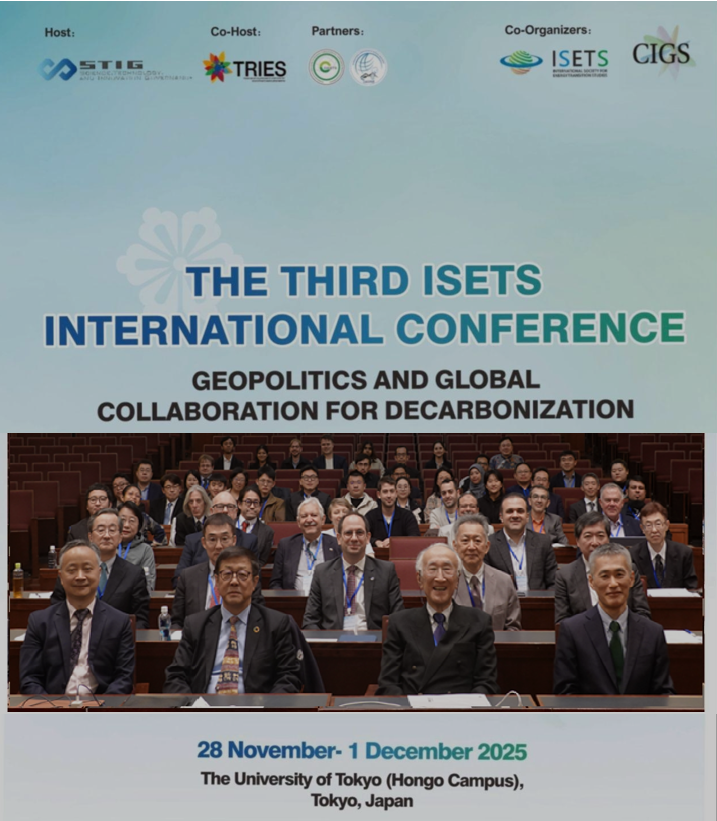
- The Third ISETS International Conference (ISETS 2025) Held at the University of Tokyo, Japan
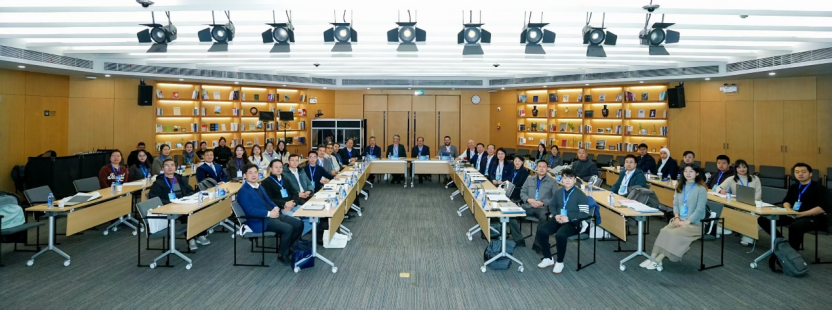
From 28 November to 1 December 2025, The Third ISETS International Conference (ISETS 2025) was successfully held at the Hongo Campus of the University of Tokyo. The conference was jointly organised by the International Society for Energy Transition Studies (ISETS) and the Canon Institute for Global Studies (CIGS) and co-hosted by the Science, Technology, and Innovation Governance program (STIG) and the Graduate School of Public Policy (GraSPP) at the University of Tokyo, and Tokai University Research Institute for Environment and Sustainability (TRIES). The conference featured a hybrid format, with participants joining both in person in Tokyo and online from around the world. Under the theme “Geopolitics and Global Collaboration for Decarbonisation,” ISETS 2025 brought together more than 140 scholars and experts from over 30 countries and regions, including Indonesia, India, China, Finland, France, Japan, the Philippines, the United States, the United Kingdom, Spain, Singapore, and Thailand, among others.
The opening ceremony on 29 November was chaired by Nobuo Tanaka, Co-Chair of the ISETS Council. Opening remarks were delivered by Xiansheng Sun, President of ISETS; Professor Hisashi Yoshikawa, representing CIGS’s President Toshihiko Fukui; Professor Hideaki Shiroyama of the University of Tokyo; Matthew Wittenstein, Chief of Section for Energy Connectivity at United Nations Economics and Social Commission for Asia and the Pacific (ESCAP); Tetsuya Watanabe, President of the Economic Research Institute for ASEAN and East Asia (ERIA); and Yokoshima Naohiko, President of the New Energy and Industrial Technology Development Organization (NEDO). The speakers warmly welcomed participants to the University of Tokyo and extended their congratulations on the successful convening of ISETS 2025.
The closing ceremony on the afternoon of 30 November was chaired by Muyi Yang. Closing remarks were delivered by Professor Satoshi Honma of Tokai University and Xunpeng Shi. Xunpeng Shi expressed sincere appreciation for the long-standing support of participating scholars for ISETS and the College of Economics and Management of Nanjing University of Aeronautics and Astronautics and officially announced the successful conclusion of ISETS 2025.
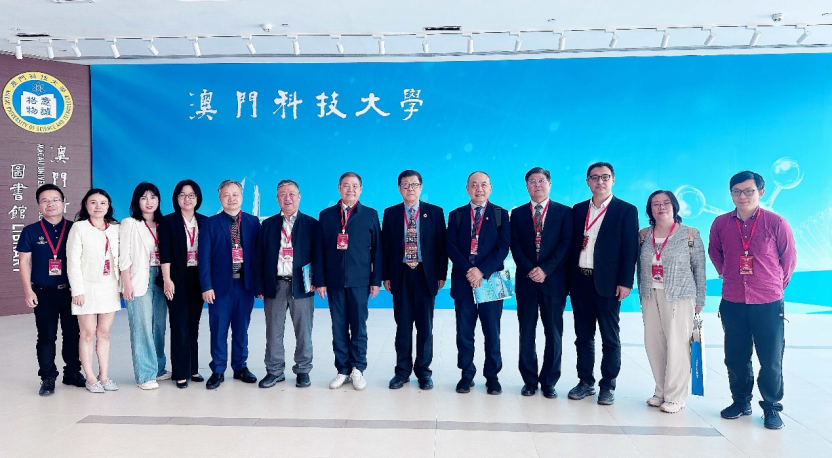
- International High-End Forum on Energy Transition 2025 Held at Macau University of Science and Technology
On November 15, the International High-End Forum on Energy Transition 2025 and the 18th Energy Transition Forum were grandly held at Macau University of Science and Technology (MUST). Themed “Climate Change and Innovative Pathways for a ‘Dual-Carbon’ Economy,” the event brought together experts and scholars from prestigious institutions such as the Chinese Academy of Sciences, Wuhan University, Sun Yat-sen University, Hunan University, Huazhong University of Science and Technology, Beijing Normal University, Hong Kong University of Science and Technology (Guangzhou), The Hong Kong Polytechnic University, Macau City University, and the University of Technology Sydney. Together, they explored effective strategies to address climate change and energy transition.
Prof. Liu Chengkun, Director of the Institute for Sustainable Development at MUST, and Prof. Shi Xunpeng, President of the International Society for Energy Transition Studies and Research Principal at the Australia-China Relations Institute, University of Technology Sydney, delivered opening remarks.
During the keynote forum, Prof. Pan Jiahua, Dr. Sun Xiansheng Prof. Qi Ye, Prof. Qi Shaozhou and Prof. Sun Yongping gave very insightful keynotes.
The parallel sessions, chaired by Prof. Wang Yuan from Tianjin University, featured scholars from Sun Yat-sen University, Hunan University, Beijing Normal University, The Hong Kong Polytechnic University, and Macau City University, who shared cutting-edge insights on environmental risks, policy frameworks, carbon reduction in power generation, corporate digitalization, and green capital.
The forum was organized by the International Society for Energy Transition Studies, hosted by the MUST School of Business, and funded by the Macau Foundation.
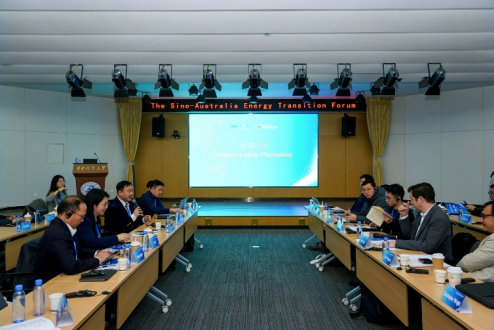
- Sino-Australia Energy Transition Forum 2025 Successfully Held in Wuhan
Initiated by the International Society for Energy Transition Studies (ISETS) and the Institute of State Governance of Huazhong University of Science and Technology (HUST), the 2025 Sino-Australia Energy Transition Forum was successfully held at the HUST International Academic Exchange Center in Wuhan from October 28 to 29, 2025. This forum marked the second event of the “Australia-China Energy Transition Forum ” series organized by ISETS and its partners, aiming to further deepen bilateral exchanges and cooperation in the field of green and low-carbon energy transition.
The opening ceremony was grandly held on the morning of October 28, with speeches delivered by Prof. Ouyang Kang (Former Deputy Party Secretary and Dean of the Institute of State Governance, HUST) and Prof. Xunpeng Shi (Principal Research Fellow of the Australia-China Relations Institute, University of Technology Sydney; President of ISETS). Prof. Ouyang Kang extended warm congratulations on the successful opening of the forum and a sincere welcome to domestic and international experts and scholars. He emphasized that energy transition is a core issue related to global sustainable development, and the in-depth cooperation between China and Australia in the field of energy carried out at HUST provides an important platform for promoting green development and advancing China’s “dual-carbon” goals. He stressed that energy transition is not merely a technical upgrade, but a profound transformation involving development models, industrial structures and even civilizational concepts.
Prof. Xunpeng Shi pointed out that China and Australia have broad cooperation space and huge potential in the energy transition field—China leads the world in clean energy technology research and development and application, while Australia is rich in energy resources and critical minerals necessary for the energy transition. Despite the complex and volatile global geopolitical environment, addressing climate change is a common mission of all mankind. He hoped that this forum would serve as a bridge to facilitate in-depth exchanges between the two countries in energy transition technologies, policies and practical experiences, and inject new impetus into bilateral energy cooperation.
Centered on Sino-Australian clean energy cooperation, critical mineral supply chains, carbon market synergy and circular economy, the forum included a keynote session and a roundtable, attracting over 20 experts from both countries. Australian experts shared insights: Prof. N J Ekins-Dauke proposed joint “relay innovation centers” for photovoltaic technology commercialization; Christopher Wright suggested supply-side cooperation in coal industry transition; Anthony Coles advocated an “ESG as a Service” model for cross-border battery recycling. Chinese experts also offered in-depth views: Prof. Ba Yu-kun put forward a Digital Twin-integrated virtual power plant framework; Dr. Xunpeng Shi proposed an “Open Alliance” for clean energy technology supply chains; Steven Ducat advocated an “Australia-China Clean Energy Superhighway” with UHV cooperation; Prof. Sun Yongling suggested full-cycle carbon accounting collaboration; Prof. Yu Pei proposed linking China’s hydrogen demand with Australia’s low-cost green hydrogen capacity.
The forum concluded with a high-level roundtable where participants reached consensuses on green hydrogen storage cooperation, carbon accounting standard mutual recognition and battery recycling information sharing. Post-forum, the Sino-Australian expert delegation visited a VOYAH new energy vehicle base and China’s carbon emission registration and clearing company, deepening Australian experts’ understanding of China’s energy transition practices. Overall, the forum strengthened bilateral academic and policy dialogue, clarified cooperation directions, and will boost high-quality Sino-Australian cooperation in new energy, carbon markets and climate governance.
FORTHCOMING EVENTS
- The ISETS Launches Interest Groups for Specialized Engagement
The International Society for Energy Transition Studies (ISETS), a leading organization dedicated to advancing knowledge sharing and collaboration on the global energy transition, is pleased to announce the establishment of specialized interest groups. This initiative aims to deepen collective understanding and accelerate progress in critical areas of the energy transition. Members are encouraged to take advantage of this opportunity to connect, learn, and contribute to the shared goal of a sustainable energy future.
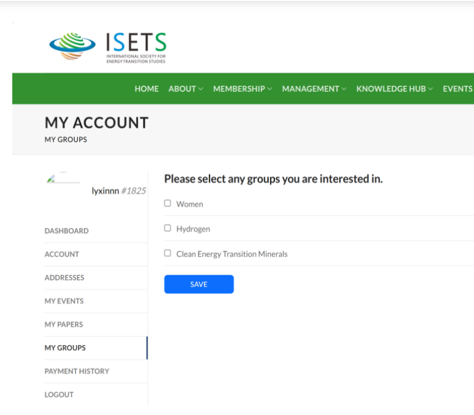
The first batch of interest groups focuses on three pivotal themes: Women, Hydrogen, and Clean Energy Transition Minerals. Each group is designed to serve as a platform for targeted discussions, resource sharing, and networking opportunities, addressing the unique challenges and opportunities within these areas.
About the ISETS Women Association (IWA) Group
The ISETS Women Association (IWA) Group is established with a mission to promote gender equality in science, particularly in the energy sector. We recognize the significant contributions women make to scientific research and innovation, and we are committed to creating a supportive environment that fosters their development and success. A key focus of IWA is advocating for the representation of women in scientific decision-making processes. We actively engage with policymakers and stakeholders to ensure that women’s perspectives and needs are prioritized in research funding and resource allocation. Additionally, we organize workshops, training sessions, and mentorship programs designed to enhance our members’ skills and knowledge. Our professional development initiatives aim to equip women scientists with the tools they need to advance their careers and assume leadership roles within their organizations.
About the Hydrogen Group
The ISETS Hydrogen Group is a dedicated research and innovation platform within ISETS, focusing on the transformative role of hydrogen in the global energy transition. The group’s mission is to accelerate the adoption of hydrogen as a clean, versatile, and sustainable energy carrier by addressing key challenges in production, storage, distribution, and utilization. The group is committed to establishing hydrogen as a cornerstone of the energy transition, contributing to global carbon neutrality goals while fostering economic development through innovation and sustainable practices. The ISETS Hydrogen Group invites researchers, practitioners, and organizations to collaborate and join efforts to realize a cleaner, hydrogen-powered future.
About the Group on Clean Energy Transition Minerals (CETM)
The ISETS Thematic Group on Clean Energy Transition Minerals (ISETS CETM Group) serves as a specialized platform focusing on the pivotal role of minerals in the clean energy transition. Our mission is to foster interdisciplinary and multi-stakeholder collaboration and knowledge sharing to address challenges and opportunities in the sustainable sourcing, supply chain resilience, and governance of Clean Energy Transition Minerals (CETMs). We organize workshops, produce publications, initiate research projects, and host networking events to advance the understanding and management of CETMs within the global energy landscape. We maintain an active online presence, offering resources and opportunities for members to contribute to the sustainable energy transition discourse.
How to Join
For more information on joining the interest groups and staying updated on their activities, please visit the ISETS website at https://isets.org/. After logging in, navigate to the “My Account” webpage and click on “My Groups.”
- The 3rd ISETS-ESCAP & 4th ISETS Global Competition of Youth Voice on Energy Transition
The International Society for Energy Transition Studies (ISETS), in partnership with the United Nations Economic and Social Commission for Asia and the Pacific (ESCAP), is pleased to announce the 2026 Youth Voice on Energy Transition Program. Supported by the United Nations Economic Commission for Europe (UNECE) and the United Nations Economic and Social Commission for Western Asia (ESCWA), this initiative aligns with the UN Secretary-General’s commitment to meaningfully engaging young people in dialogue on critical global challenges, including the transition to sustainable energy.
For the 2026 competition year, the eligibility criteria have been updated to encourage diverse team compositions and intergenerational collaboration while maintaining a focus on youth leadership.
- Team Composition: Participants may enter as individuals or in teams.
- Team Size: Teams may include up to six (6) members.
- Structure: There are no external advisors. All responsibilities are borne by the team members. Please note that team members cannot be changed once submitted. If a team member withdraws from the team, an application must be submitted (Members may only be removed, not added.)
- Age Requirement: At least 50% of the team members must be aged 30 or younger (born on or after January 1, 1996).
- Gender Balance: To promote inclusivity, each team must include at least one female member.
- Financial Support: Only members aged 30 or younger from the global finalist teams will be eligible for financial assistance to attend the Youth Dialogue and associated events. Female participants will be given priority for financial support.
Important Dates:
1 March 2026: Registration opens for the 3rd ISETS-ESCAP Youth Voice Competition.
31 March 2026: Deadline for the proposal submission.
31 May 2026: Announcement of the divisional shortlists and information for video submission.
15 June 2026: Deadline for video submissions.
15 July 2026: Announcement of the divisional winners and information for global final competition.
October 2026: Participation in the ISETS-ESCAP Youth Dialogue, which will be held during the 15th International Forum on Energy for Sustainable Development (IFESD-15).
Contact US
Email: info@carbonxprogram.com